Showing posts with label collabora_planet. Show all posts

Monday, March 26, 2012

Using Nokia N9 in Korea


It’s been almost 3 months since I started using a Nokia N9 as my secondary phone, which is a Linux based smart phone released by Nokia on October 2011. In this post, I will introduce what Nokia N9 is and how to use it in Korea, because it adopts an open source mobile platform which means that anyone can be involved with the project.

Nokia N9
Unfortunately, N9 is the first and last MeeGo phone, but it seems to be close to the Maemo platform, because it uses Qt as the UI framework and the Debian package system. In addition, N9 is the first mobile phone to embrace WebKit2 which supports the multi-process model, so you can build WebKit for Nokia N9.

Korean Support
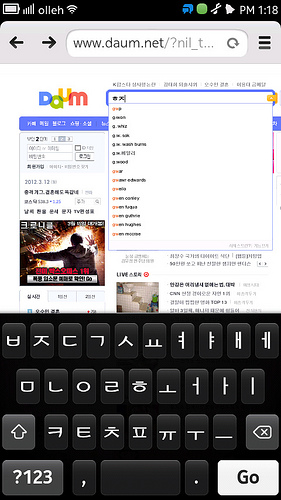
Actually, I had been having trouble with using N9 because it doesn’t support Korean language officially, so there is no Korean keyboard and Korean fonts by default. Fortunately, a Nokia Korean engineer developed a Hangul keyboard and its debian package with Korean fonts. I think he might have worked on this in his free time. I am very grateful for his efforts.  You can find the source code of the Korean keyboard from Gitorious.

N9 User Group in Korea
In addition, there is a small N9 user group in Korea, so I got some information on how to register N9 with Korean wireless telecommunication operators such as SK Telecom and KT. Interestingly, the saleswoman in the phone shop was able to set it up without asking any questions while registering it, which shows that N9 UI is very intuitive to use.

Developer Support
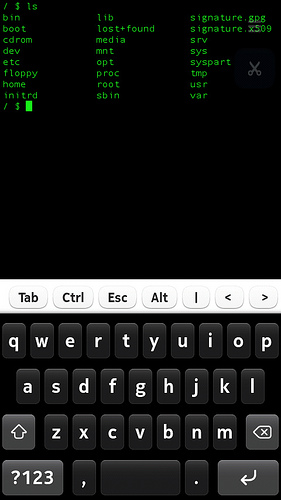
It’s quite easy to install developer packages in N9. You can run an X-terminal and browse the directories to check which system libraries are installed. Furthermore, if you want to develop a QT application, you can even install the QT SDK and developer tools in your Linux, Windows, and Mac.

Installing Gtk+
Gtk+ had been used as the default UI widget until Maemo Fremantle, but N9 started using Qt by default. Fortunately, a hacker did the porting of Gtk+ for Maemo Fremantle to N9, so, you can install the same Gtk2.14.7+ on N9.

What about the next model of N9?
I think that Nokia didn’t give up their generic Linux platform although they chose the Window phone platform instead of MeeGo. I expect that Nokia will continue on releasing Qt based smart phones in the future because a true Linux platform will be their hidden key someday.

Anyway, if you want to make your own mobile platform or test its component software, N9 would be a good test bed for you.

Tuesday, February 21, 2012

Glad to become a new GNOME foundation member


After I read this blog post, I applied for membership in the GNOME Foundation. Finally, my application was accepted last week. I think that my WebKitGtk+ contribution and GNOME Korea activities could count towards membership.

The main reason why I decided to become a GNOME foundation member is to let GNOME folks know about the GNOME Korea community(http://gnome.or.kr). The GNOME Korea community started to translate for GNOME in 1998, and is mainly working on Korean translation(http://l10n.gnome.org/teams/ko/). Changwoo Ryu has led the Korean translation team since the early stages of GNOME. As a member of the GNOME Korea community, I organize GNOME Tech Talks every month to introduce various GNOME technologies to Korean developers and am also in charge of maintaining the GNOME Korea blog (http://gnome-kr.blogspot.com/).

I'm really grateful to become a new GNOME foundation member. In particular, I’d like to thank Xan Lopez and Gustavo Noronha(kov) for helping me to become involved in WebKitGtk+ development. In the future, I will try to report on activities of the GNOME Korea community and my GNOME experiences through Planet GNOME and here.

Monday, December 05, 2011

Accelerated Composting in WebKitGtk+

During the WebKitGkt+ hackfest 2011, I applied Accelerated Compositing to WebKitGtk+ using Clutter so it started working like the webkit-clutter port. Finally, I was able to run the same demo in GtkLauncher as follows:


This is not upstreamed yet, but Imy patches are getting reviewed. Gustavo and Martin are helping me  write more good patches. Thanks!

I think that this hackfest was done well. You can check more news about the WebKitGtk+ hackfest from other blog posts:
http://blogs.igalia.com/juanjo/2011/12/04/webkitgtk-hackfest-wrap-up/
http://blogs.igalia.com/juanjo/2011/11/17/announcing-the-webkitgtk-hackfest-2011/
http://www.hadess.net/search/label/hackfest

I would like to thank my employer Collabora, Igalia and the GNOME Foundation for helping us attend the hackfest. See you at the next hackfest!


Wednesday, November 30, 2011

WebKitGtk+ Hackfest 2011

(C) Mario 

Gustavo and I are attending the WebKitGtk+ hackfest 2011 which is held at the Igalia office in A Coruña, Spain like the last time. This is an annual event for WebKitGtk+ maintainers to work together at the same place.

We made a list of work items on the blackboard as usual on the first day.  You can find these topics in the wiki. My major work item is to apply Accelerated Compositing implementation of the clutter port to WebKitGtk+. If I finish it a bit earlier, I will try to hack my unresolved patches such as IME support in WebKit2Gtk+ and applying Tiled Backing Store to WebKitGtk+.

Happy Hacking!

Wednesday, November 23, 2011

Talking about GNOME3

I gave a talk about GNOME3 at Daum DevOn conference in Korea. Daum is a popular web portal site in Korea like Yahoo. They invited many developers & user communities to the conference, so the GNOME Korea community had a chance to introduce GNOME3 and the community to the attendees.

I was so glad to introduce GNOME3.2 and the infra technology like GTK+, Clutter, GStreamer, WebKitGtk+, Telepathy and GObject-Introspection. Here are the slides and some photos.

Saturday, August 27, 2011

Desktop Summit 2011

It has been a week since I got back home from Cambridge. I had a day trip in London before leaving for Korea, which was very nice because I got the chance to look around the royal places, museums, and parks. In particular, I was so excited to find a TINTIN shop by chance. :-)
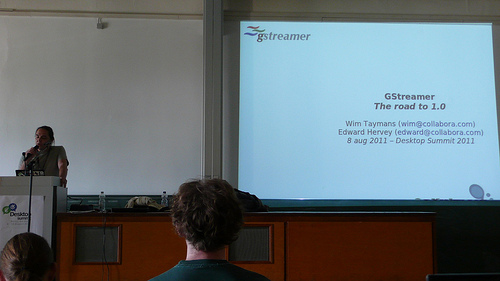
Anyway, Desktop Summit 2011 was great: there were many great talks, workshops, BoFs, and parties as usual. It was good to meet my Collabora colleagues, WebKitGtk+ maintainers(Kov, Xan, Martin, Alex, Philippe, Diego), a Korean KDE contributor(peremen), and some new people(AdriánDebarshi,...). I even gave a talk of webkit-clutter. If I was asked to compare this summit to the last one, I can say two things: first, GNOME and KDE talks were not duplicated so I could attend a KDE talk about a WebKit Browser and there were more common sessions GNOME and KDE folks could share together. Therefore, this conference seemed more like a true Desktop Summit. The next difference was that it’s very hard to find mobile related topics in this conference. I think that It was a big loss for the community that Nokia left MeeGo. Although Intel is trying to maintain the MeeGo Project, it seems like it's not easy to delivery MeeGo to the mobile market alone.

webkit-clutter talk
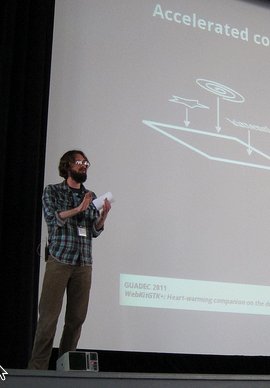
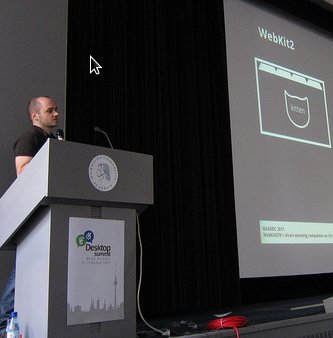
I gave a talk about webkit-clutter in place of Kov because he had personal business to attend to. This talk was a part of the WebKit talk: first, Martin explained the new features of WebKitGtk+ 1.4.0 and upcoming feature of the next version. Second, Alex introduced the current status of WebKit2Gtk+ and gave a demo of it, which showed us how to restart a flash plug-in without affecting browsing capability. That explains why we need the multiple process model in web browsing.  Finally. I introduced the webkit-clutter port: why the webkit-clutter port is needed, what we have done, and what features are coming. I will introduce more details about the WebKit talk in the next blog post.
Xan showed a demo of installing and running a web application in GNOME3.  He said “80% of the time people use the web so 80% of GNOME effort should go to the web”, I agree with him, we need to focus on web integration with GNOME more. Anyway, Xan seemed like a web evangelist during his talk.
Other interesting talks
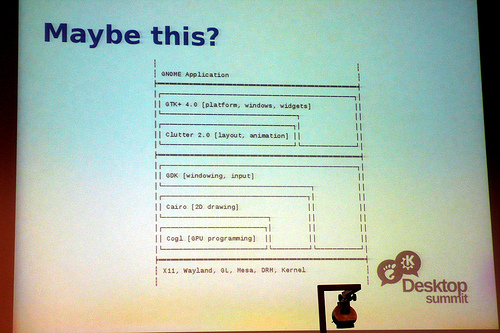
  • GTK 4 - the future of your favorite toolkit: Actually, nobody has started working on GTK4+, but the speakers showed a big picture of GTK+4  which will improve in areas of animations, effects, and transformations. For realizing this plan, Clutter will be used as a graphic backend, which allows GTK+ applications to use animation effects easily.
  • GNOME Shell version π: Owen Talyor Introduced GNOME Shell 3.2 with some demos such as Google Account Integration, soft keyboard, and more extensions.
  • GNOME a continent, starting from Asia:  There was a introduction of how the GNOME Asia summit started, what it has done and what it will do. I wish to attend the next GNOME Asia Summit held in Hong Kong.
  • Towards a multitouch gnome-shell: Although it will take more time to see if X.org supports multi-touch officially, Carlos showed a demo of the multi-touch gnome shell. This seemed like the first step to touch based devices.
NateOn connection manager for Telepathy
NateOn is an instant messenger which is very popular in Korea. As you can see the above picture, it supports the Linux version, but the project has not been maintained well. The problem is that NateOn was removed from the Debian archive because it built with KDE3.(ChangWoo’s blog article) As a result, Korean users can’t download NateOn from Debian repositories. Although there was a proposal to develop a NateOn connection manager for Telepathy from the GNOME Korean community, it was just an idea. Fortunately, I met a Telepathy contributor, Debarshi who is interested in this project. I shared all the information about NateOn with him so that he was able to start developing the connection manager. When it starts to work a bit, I will be able to join the project.

Currywurst
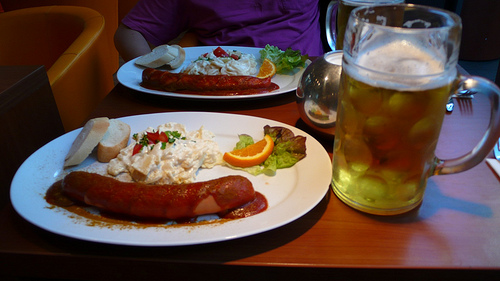
I didn’t have a chance to go to any tourist attractions in Berlin this time, but I had Currywurst which is well-known Berlin food. It was good to have it with a beer.

Visiting the Cambridge office
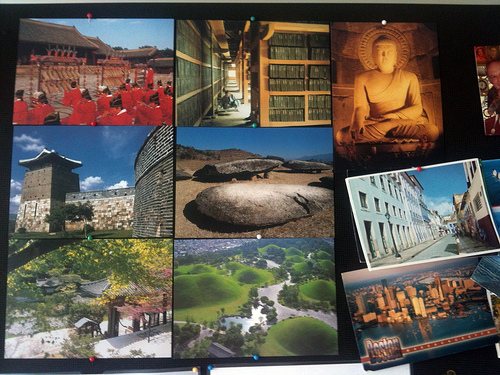
After the Desktop Summit, I moved to Cambridge for visiting the company HQ office. It was very nice to meet people and work at the office. I had brought along some postcards of UNESCO World Heritage of Korea for a small gift as follows:

You can see them from the bulletin board when you visit the office.

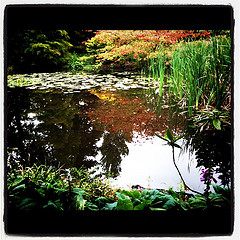
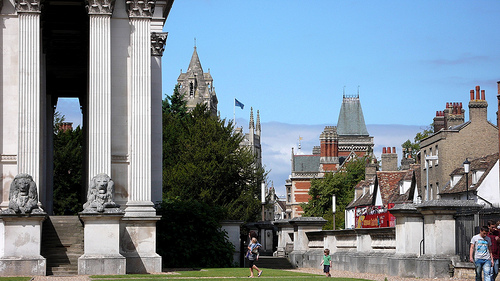
There are many tourist attractions near the office, so I went to the Cambridge University Botanic Garden and the Fitzwilliam Museum during my stay. It was very nice, so I have shared some photos here.

On the last evening, we had a team dinner in an Indian restaurant. Although British accent was a bit unfamiliar to me, I enjoyed the talks and the Tandoori chicken. Anyway, I’d like to thank everyone in the office for helping me stay and work well. Thanks!

Finally, I'd also like to thank my employer, Collabora for sponsoring my trip to Berlin for Desktop Summit 2011. I hope to see everyone at the next Guadec in A Coruña, Spain.